

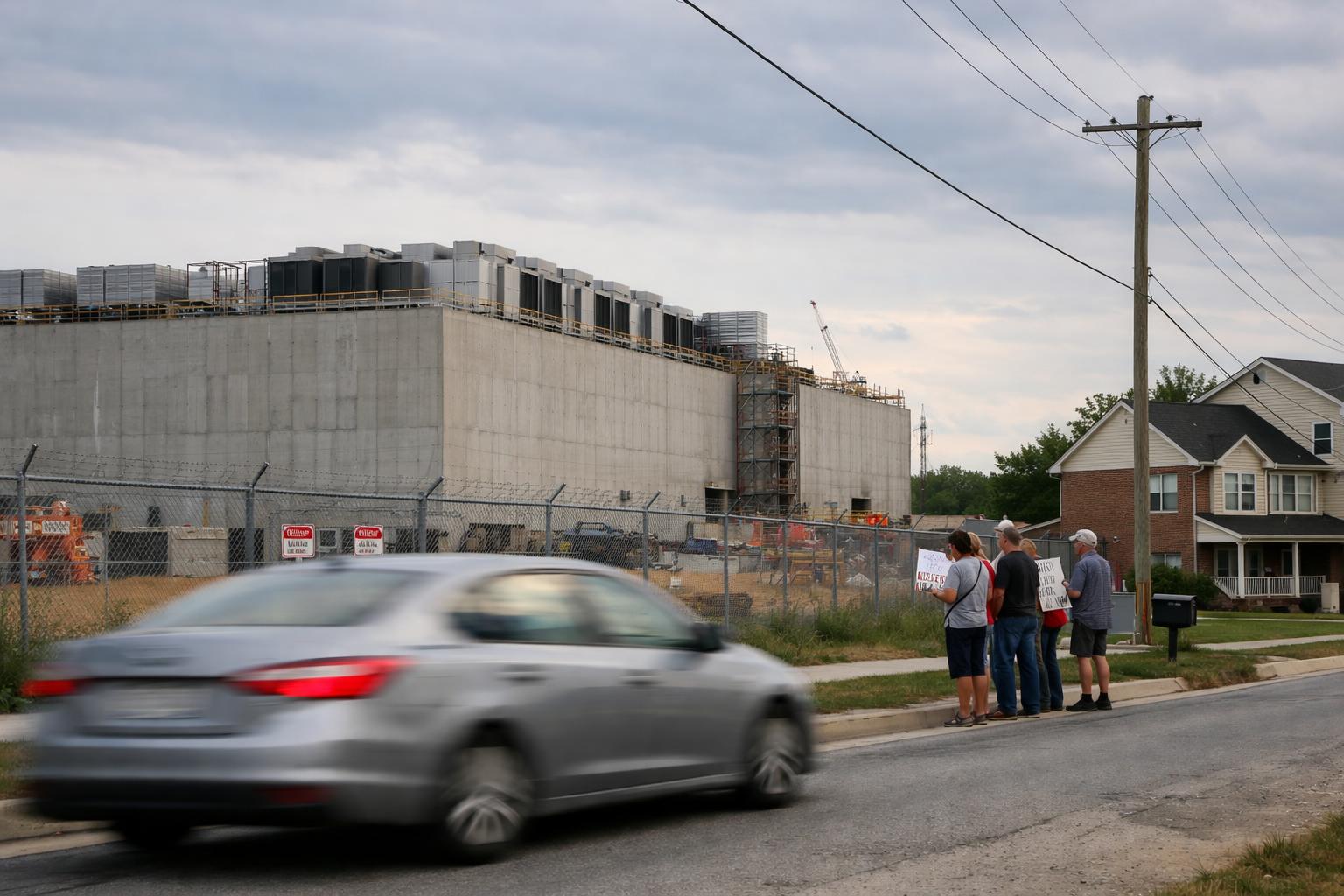
A Redfin-Ipsos survey finds 47% of U.S. residents would oppose an AI data center near their home, while 38% would support one. Younger adults and Republicans are more likely to back local data-center projects.
Source: Original report
A nationwide Redfin-commissioned survey conducted by Ipsos in November 2025 found substantial local resistance to artificial intelligence data centers: 47% of respondents said they would oppose construction of a data center in their neighborhood, while 38% said they would support it. The survey was fielded to 4,000 U.S. residents and carries a credibility interval of +/-1.9 percentage points.
Why data centers provoke opposition
Respondents cited a mix of environmental and community concerns. Common objections include:
- Pressure on local utilities — data centers consume large amounts of electricity and water.
- Higher energy costs and environmental consequences tied to heavy power use.
- Noise and the industrial scale of facilities that can clash with residential areas.
- Broader worries about the societal effects of AI, including job loss risk.
At the same time, survey materials and industry observers note potential local benefits: data centers can bring well-paid technical and security positions, construction employment during build-out, and investments in energy and water infrastructure that may benefit surrounding communities.
Who is more likely to support local data centers
Support for placing a data center in one’s neighborhood is stronger among younger adults and varies by political affiliation. The survey found that:
- About half of millennials (50%) and nearly half of Gen Zers (48%) would support a data center nearby.
- Support falls to 38% among Gen X and to 22% among baby boomers.
- By political leaning, roughly 49% of Republicans and 36% of Democrats said they would support a data center in their neighborhood.
How data centers stack up against other types of development
Data centers drew slightly more opposition than any other building type the survey asked about. Key comparisons include:
- 46% oppose converting single-family homes into smaller multi-unit dwellings.
- 37% oppose construction of a new apartment complex nearby.
- 31% oppose a new mixed-use development in their neighborhood.
The results suggest that while many Americans resist dense housing projects, AI data centers elicit particularly strong and specific concerns tied to utilities, scale and the technology itself.
Local reactions and planning tensions
Local real estate professionals and residents in communities with multiple data centers report frustration about rapid development. Some question whether permitting such facilities aligns with long-term community goals or quality-of-life priorities, especially when projects replace familiar retail sites or open land.
Methodology
The findings cited here come from a Redfin-commissioned Ipsos poll conducted in November 2025. The survey sampled 4,000 U.S. adults; the combined results have a credibility interval of +/-1.9 percentage points. Respondents chose from strongly/somewhat support, strongly/somewhat oppose, or no opinion; the analysis groups the support and opposition responses together.