


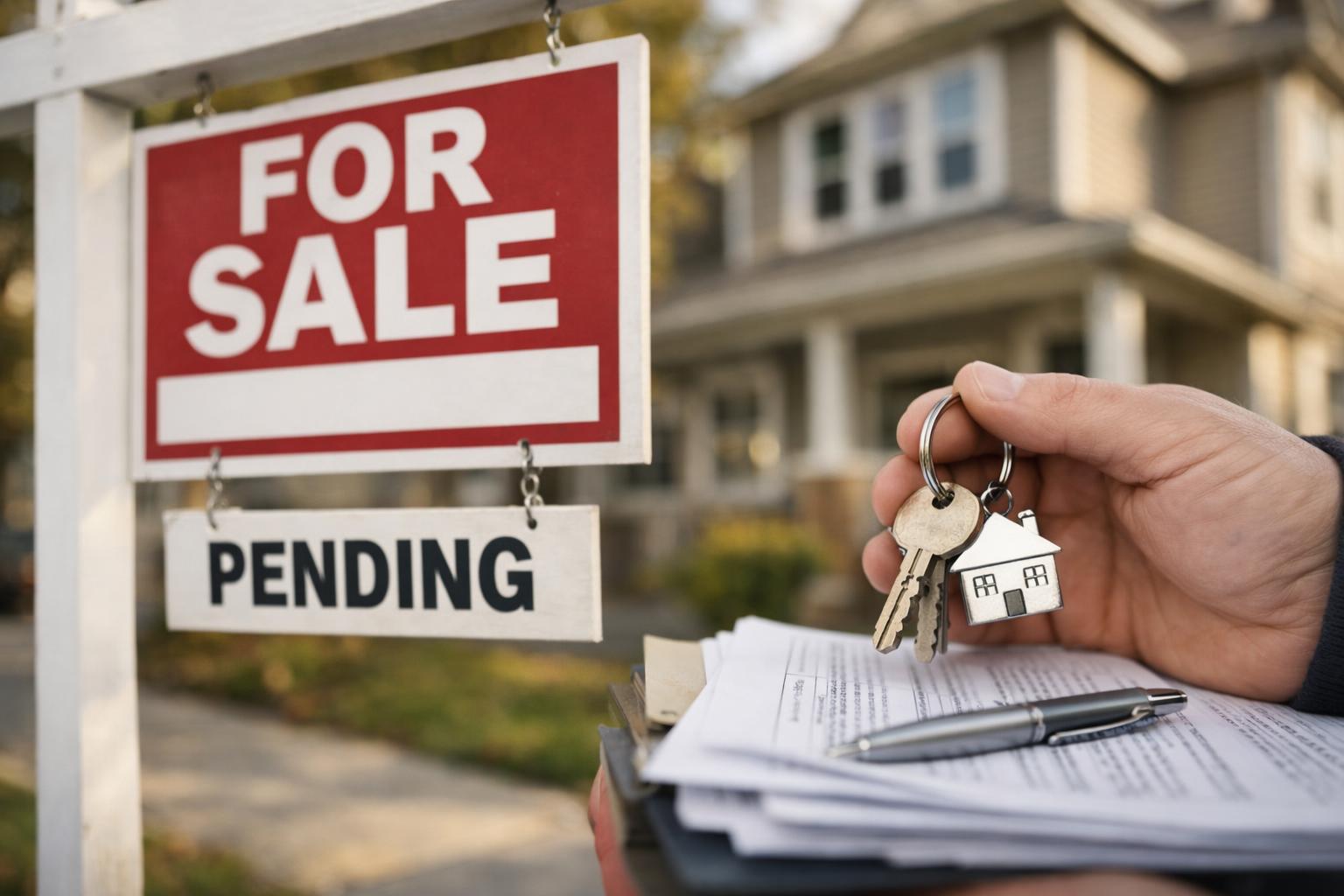
The Federal Reserve kept its benchmark rate unchanged for a fifth straight meeting, yet three regional presidents pushed for a hike. Analysts warn mortgage rates and consumer borrowing costs could stay elevated far longer than most buyers anticipate.
Source: Original report
A Familiar Hold With an Unfamiliar Warning
For the fifth consecutive meeting, the Federal Reserve left its benchmark rate sitting at 3.50%–3.75%. The pause itself surprised no one. What did surprise markets: three regional Fed presidents — from Cleveland, Minneapolis, and Dallas — voted against the hold, arguing for an immediate rate increase. It marks the first time since 2016 that three officials dissented in the same direction simultaneously, and that direction was decidedly upward.
New Fed Chair Kevin Warsh opened his tenure on a deliberately cautious note, issuing a stripped-down policy statement that made no forward-looking promises and left little ambiguity about the central bank's top concern: inflation. Markets reacted sharply. Stocks shed more than 800 points on the day, the 30-year Treasury yield climbed to approximately 5.2%, and traders began pricing in roughly a one-in-three chance of an outright rate increase before year-end.
Why Inflation Won't Cooperate
The Fed's reluctance to cut — and some officials' desire to raise — stems from several overlapping inflation pressures that aren't fading on their own schedule.
- Tariffs: Much of the price impact from recently enacted tariffs has yet to reach consumers. The increases are still moving through supply chains and will likely show up at the register in the coming months.
- Energy prices: Renewed geopolitical tension in the Middle East has kept oil elevated, and energy costs feed through into nearly every other category of goods and services.
- AI-driven capital demand: The massive build-out of data centers, chip manufacturing facilities, and power infrastructure is pushing up the cost of construction materials and labor in ways that weren't a factor a few years ago.
- Federal deficits: Persistent government borrowing at scale competes with private borrowers for the same pool of available money, keeping upward pressure on rates across the board.
Household inflation expectations have also crept up to around 3.5% over the next year. When people expect prices to keep rising, they tend to demand higher wages, which pushes business costs and prices higher — a self-reinforcing cycle that makes the Fed's job considerably harder.
The Deeper Shift: The 'Neutral Rate' Has Moved
Beyond the immediate inflation picture lies a more structural change that could affect borrowing costs for years. Economists refer to the neutral interest rate — sometimes called r-star — as the rate at which the economy runs at full employment with stable inflation. It's an invisible gravity that pulls mortgages, auto loans, and corporate debt toward it over time.
For roughly four decades, that gravity weakened. An aging global population saved more, a flood of foreign capital sought safe U.S. assets, and businesses found fewer high-return projects worth financing. The result was a long, slow decline in the neutral rate that made cheap money feel like a permanent feature of the financial landscape.
Recent research suggests that dynamic is reversing. The San Francisco Fed finds that the global capital flows that once dragged U.S. rates downward have shifted direction since 2019. At the same time, demand for investment capital is surging — led largely by AI infrastructure spending. Meanwhile, the Cleveland Fed's latest model estimates the real neutral rate has climbed from around 0.8% in 2021 to roughly 1.5% today, placing the nominal neutral rate near 3.7% — essentially where the Fed's current policy rate already sits. That means the central bank is no longer applying much of a brake at all, which is exactly why three officials want to press harder.
Three Forces Pushing Rates Higher for Longer
Economists increasingly agree on three structural drivers lifting the neutral rate:
- Government deficits: Large, sustained federal deficits pull money from the savings pool rather than adding to it. Research suggests each additional percentage point of deficit relative to GDP can add roughly a quarter-point to long-term interest rates.
- Fading foreign savings flows: The decades-long wave of overseas capital that helped finance affordable U.S. mortgages is receding as populations age abroad and capital allocation patterns shift globally.
- AI capital expenditure: Building out artificial intelligence infrastructure represents a genuine, large-scale demand for borrowed capital — not just a market narrative. If AI also accelerates underlying productivity growth, the upward pressure on rates could prove durable rather than temporary.
What This Means for Homebuyers and Borrowers
For anyone waiting for mortgage rates to fall meaningfully before buying or refinancing, the Fed's current posture carries a sobering message.
The 30-year fixed mortgage rate averaged roughly 6.66% this week, up from a low near 6.0% earlier in the year. Because mortgage rates track long-term bond yields rather than the Fed's overnight rate directly, the recent jump in Treasury yields has translated quickly into higher monthly payments. On a $400,000 loan, the move from 6.0% to 6.7% translates to approximately $180 more per month.
Credit card holders face little relief either. Average rates are running near 20%, with balances carrying interest charged above 22%. A Fed that holds rates steady provides no relief on that front, and an outright hike would push the floor higher still. Auto loans and business credit lines face the same arithmetic: if the neutral rate has structurally risen, the cost of borrowing at every level settles at a higher baseline.
The Bottom Line for Housing
The housing market has spent two years waiting for the Fed to pivot toward cuts and deliver mortgage rate relief. That pivot now appears far less certain — and may not come at all. If the structural forces lifting the neutral rate are as persistent as researchers increasingly believe, the era of sub-4% mortgages wasn't a normal state of affairs that will eventually return. It was a decades-long anomaly produced by demographic and capital-flow conditions that are now unwinding.
Buyers, sellers, and lenders alike may need to recalibrate their expectations around a higher cost of borrowing — not as a temporary hurdle, but as the new baseline for the foreseeable future.