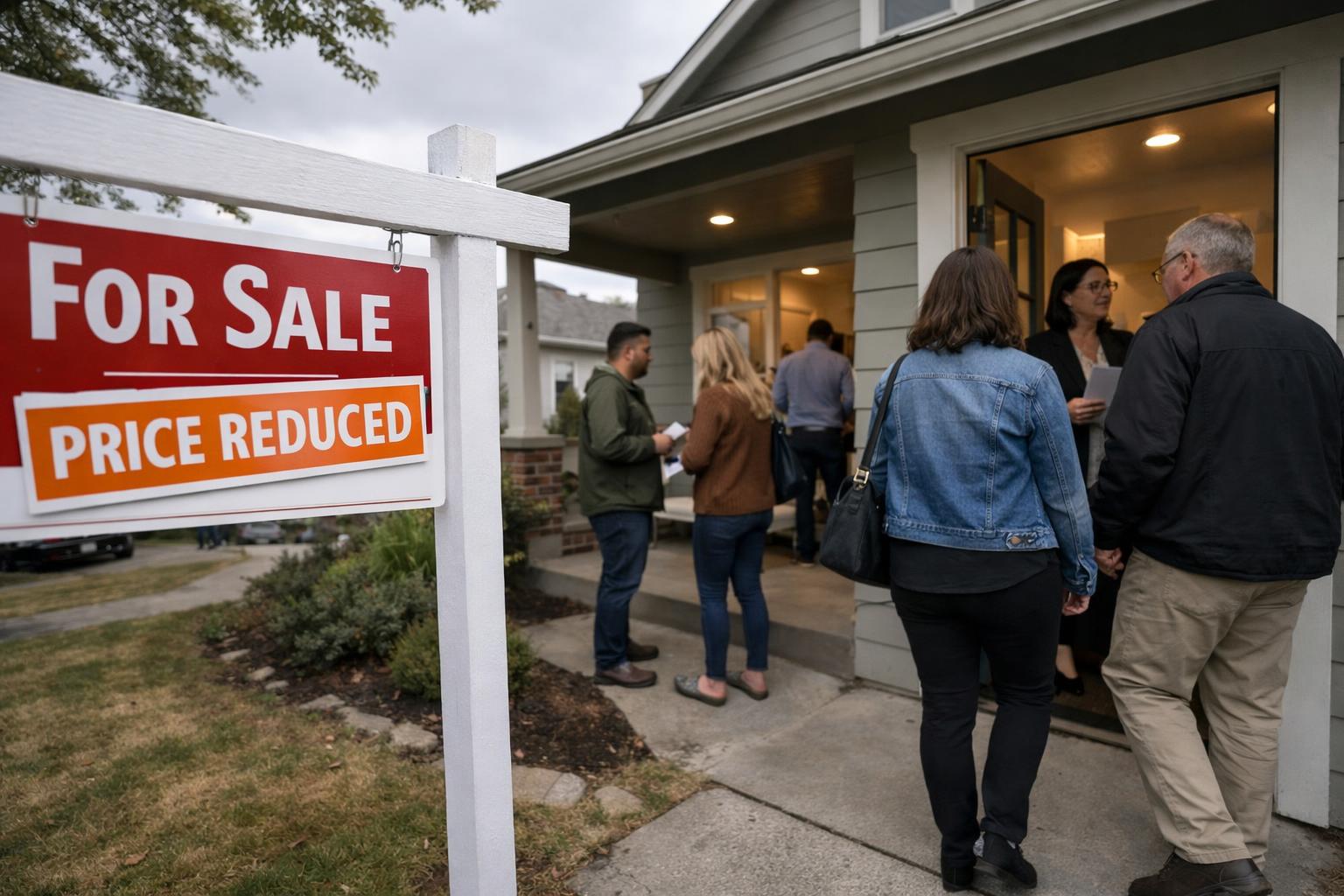



Pending home sales rose a modest 0.4% week over week through early August, while new listings jumped 1.7%—the largest weekly gain in five months—giving buyers slightly more room to negotiate in a market still weighed down by elevated mortgage rates.
Source: Original report
A Tentative Pulse in a Slow Summer Market
The U.S. housing market showed faint signs of movement to open August, but the overall picture remains one of restrained activity. Pending home sales climbed 0.4% on a seasonally adjusted, week-over-week basis during the four weeks ending August 9, according to new data from Redfin. Mortgage purchase applications also improved, rising 3% from the prior week.
Despite the uptick, context matters: pending sales are sitting at their second-lowest level since March. Analysts caution that a single week's gain may reflect routine statistical variation rather than a genuine inflection point. On a year-over-year basis, pending sales remain 1.6% below where they stood a year ago.
Mortgage Rates Near a 12-Month High Are Holding Buyers Back
The primary drag on demand continues to be borrowing costs. The weekly average 30-year mortgage rate stands at 6.69%—its highest reading in more than a year—pushing the median monthly housing payment to $2,626, a 1.7% increase compared with the same period last year. Broader economic uncertainty is also keeping a significant share of prospective buyers on the sidelines.
Supply Side Sees More Meaningful Momentum
While buyer demand remains muted, sellers showed more energy. New listings surged 1.7% week over week, marking the strongest single-week supply gain in roughly five months. Combined with the large number of homes already sitting unsold, total active inventory rose 0.7% from the prior week. That growing supply is quietly shifting negotiating dynamics in buyers' favor across much of the country.
"This isn't 2021 and 2022; the sellers' list price is a starting point for negotiations," said Sheryl Wingate, a Redfin Premier agent in the greater Seattle area. "If a buyer loves a home, they should make an offer they're comfortable with, ask for the concessions they want, and open negotiations."
Wingate also noted that even in a subdued market, well-maintained, move-in-ready homes at accessible price points continue to attract multiple offers and sell quickly. At the higher end, affluent buyers less constrained by mortgage rates have kept luxury segments relatively active.
Standout Metro Performers
Among the 50 largest U.S. metros tracked in the report, a handful stood out for supply growth. Montgomery County, PA posted a 5.1% gain in new listings, while Virginia Beach, VA led with a 12.5% increase—both suggesting localized pockets of seller confidence even as national demand stays soft.
What It Means for Buyers and Sellers
- Buyers have more inventory to browse and more room to negotiate than at almost any point in the past two years. Requesting concessions—closing cost help, rate buydowns or repair credits—is increasingly viable.
- Sellers of turnkey homes priced competitively are still finding willing buyers, but overpriced or dated properties are sitting longer.
- Rate watchers should note that any meaningful decline in mortgage rates could rapidly unlock pent-up demand that has been building throughout the summer.
Redfin's analysis covers data from more than 900 U.S. metro areas and is based on homes listed and sold during the measured period. Weekly data is subject to revision.