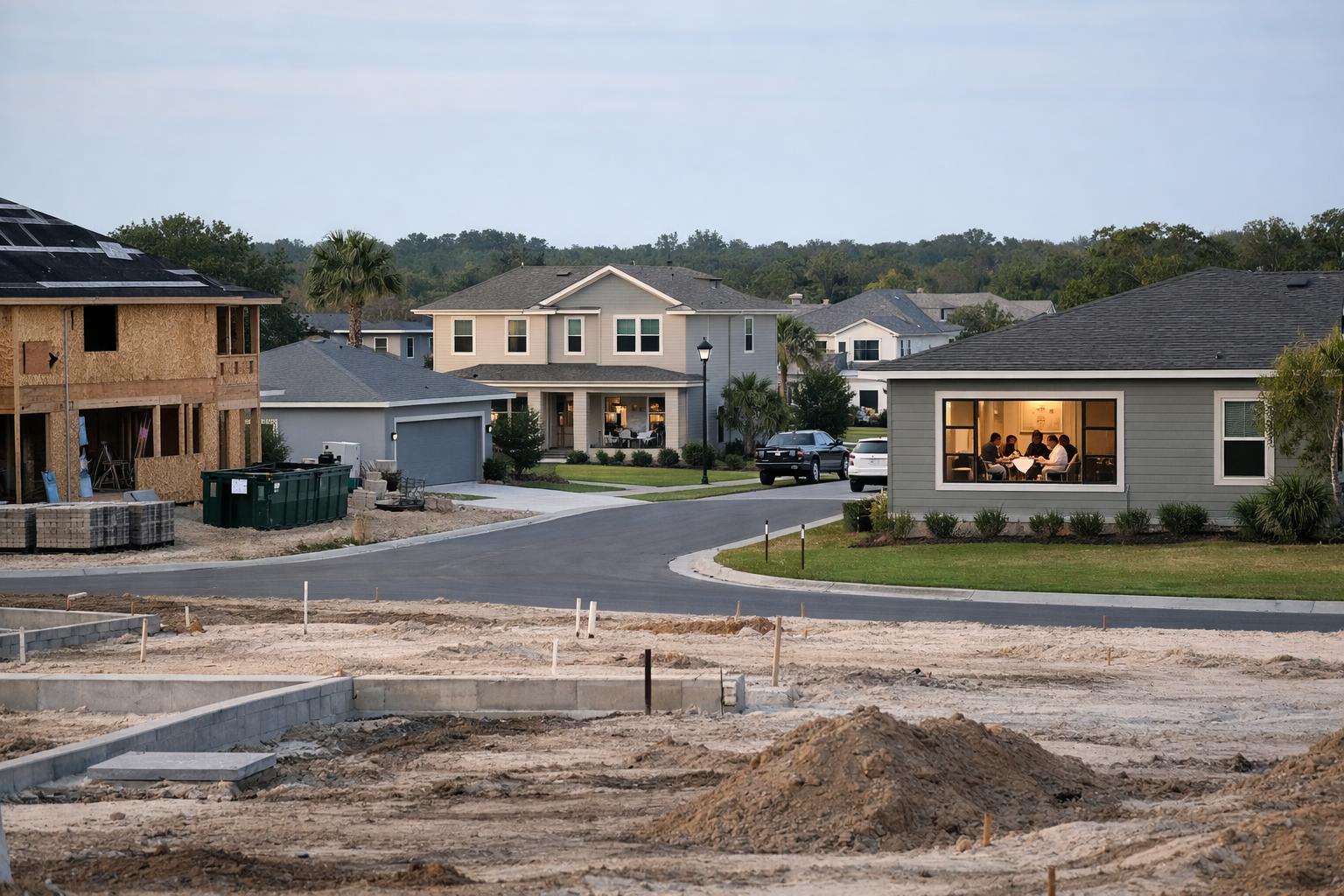



Persistent inflation and higher borrowing costs are squeezing household budgets and cooling demand for new homes, leaving Florida buyers and builders cautious.
Source: Original report
The Federal Reserve left its policy rate unchanged at 3.5%–3.75%, but the decision underscored a deeper dilemma: inflation remains elevated while the labor market shows signs of weakening. That combination is keeping mortgage rates elevated and putting strain on household finances.
Why inflation still matters
The Fed's preferred inflation gauge, core PCE, rose 0.3% in March and sits about 3.2% year over year. Headline PCE increased 0.7% for the month and 3.5% from a year earlier, the largest annual gain in nearly three years. Energy price jumps were a significant factor, but underlying inflation is still running above the central bank's goal.
How the mixed economy affects housing
First-quarter GDP grew at a 2% annualized rate, but that headline masks uneven activity. Business investment and a rebound in government spending provided much of the lift, while consumer outlays and residential investment lagged. In practical terms, households are coping with higher costs and are less willing or able to make big purchases like new homes.
Housing market signals to watch
- New home sales and builder activity: Higher financing costs for incentive programs, softer pricing for some new construction, and more resale inventory are making it harder for builders to sell product.
- Mortgage rates: With inflation above target, a durable drop in borrowing costs looks unlikely in the near term, keeping monthly housing costs elevated for buyers.
- Labor market trends: Payrolls and participation matter for demand. March payrolls rose by 178,000, but revisions left the prior two months with a net loss. Initial jobless claims fell to about 189,000, the lowest level since 1969, but that likely reflects a smaller pool of insured unemployed workers rather than a surge in hiring.
What this means for Florida buyers and sellers
Florida's housing market is feeling the same crosscurrents as the national economy: buyers face higher carrying costs and more caution, and builders are adjusting to slower sales and competitive resale inventory. The combination of stubborn inflation and a labor market that is steady but not accelerating means activity may stay muted until clearer economic trends emerge.
Investor and policymaker watchlist
- Further inflation readings and the next jobs reports — a weak payroll print or falling participation could change the Fed's calculus.
- Mortgage-rate movements tied to inflation expectations and energy prices.
- Sales trends for new construction versus resale listings as indicators of buyer confidence.
For now, the Fed appears content to wait for more definitive data. That pause leaves Florida buyers and builders navigating higher costs and uncertainty rather than benefiting from easier financial conditions.