


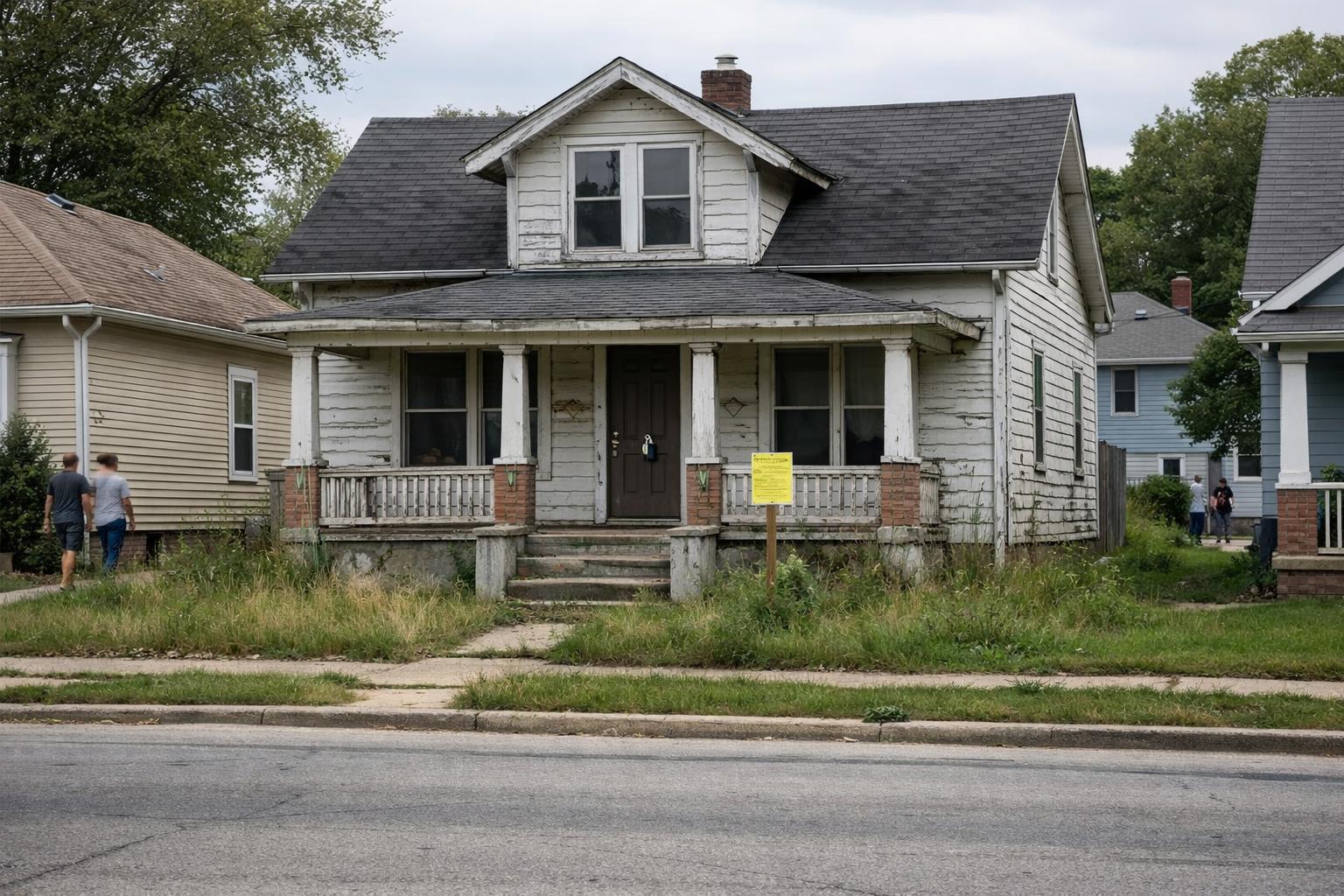
Foreclosure listings reached their highest share of the market since 2020, with the median REO property selling at a 27.2% discount — giving budget-focused buyers a real but challenging path to savings.
Source: Original report
Buyers struggling with affordability have a growing — if unconventional — option: foreclosed homes. According to a new report from Realtor.com, foreclosure listings climbed to their highest share of total inventory in six years, with the median bank-owned property selling at a 27.2% discount relative to its estimated market value.
Foreclosure Inventory Rising, But Not a Crisis
As of April 2026, foreclosure listings accounted for 1.3% of all homes on the market, up noticeably from recent lows and edging closer to the 1.7% share recorded in April 2020. Economists who reviewed the data cautioned against reading too much alarm into the numbers.
Joel Berner, senior economist at Realtor.com, attributed the rise to a structural unwind rather than a market collapse. He noted that pandemic-era forbearance and foreclosure moratorium programs fully expired in 2024, and the homeowners most exposed are those who purchased near peak prices and are now contending with rising insurance costs, property taxes and adjustable-rate mortgage resets. Even so, he characterized the current environment as a return to 2019 norms — far removed from the scale of the Great Financial Crisis.
How the Discount Works
When a foreclosed home fails to sell at auction, it passes to the lender as real estate owned (REO) property and is typically listed on an MLS. Lenders generally price these homes aggressively to move them off their books.
The median REO discount has fluctuated between roughly 20% and 35% since 2018. The upper end of that band occurred in 2022 and 2023, when pandemic-driven demand pushed automated valuations higher than reality, making discounts appear larger than they actually were. With home price growth flattening through 2025 and into 2026, the spread has settled back to a more historically consistent level.
Why REO Homes Take Longer to Sell
Despite generating 26.5% more page views than typical listings in the first half of 2026, foreclosed homes spend an average of 11 more days on the market than standard inventory. Several factors explain the lag:
- REO listings had roughly 30% fewer photos than conventional listings on average.
- Property descriptions were approximately one-third shorter, offering buyers less detail upfront.
- Most foreclosed homes are sold as-is, requiring buyers to absorb any repair costs discovered during the process.
Buyers can still conduct interior inspections and secure conventional financing, but the combination of limited marketing materials and uncertain property condition leads many to take more time — or walk away entirely.
Where Foreclosure Listings Are Most Concentrated
The metros carrying the largest share of foreclosure listings tend to be more affordable markets where buyers entered homeownership with thinner financial cushions, making them more vulnerable to cost increases over time.
A Path to Savings — With Patience Required
For buyers who are willing to do the work, the discounts are real. Berner described foreclosures as a meaningful option in a market where affordability remains the primary obstacle for many households, while stressing that navigating the process requires preparation and tolerance for uncertainty.
The broader takeaway from the Realtor.com data is that rising foreclosure activity reflects a market rebalancing rather than distress — a distinction that matters both for buyers assessing risk and for agents helping clients weigh their options.