


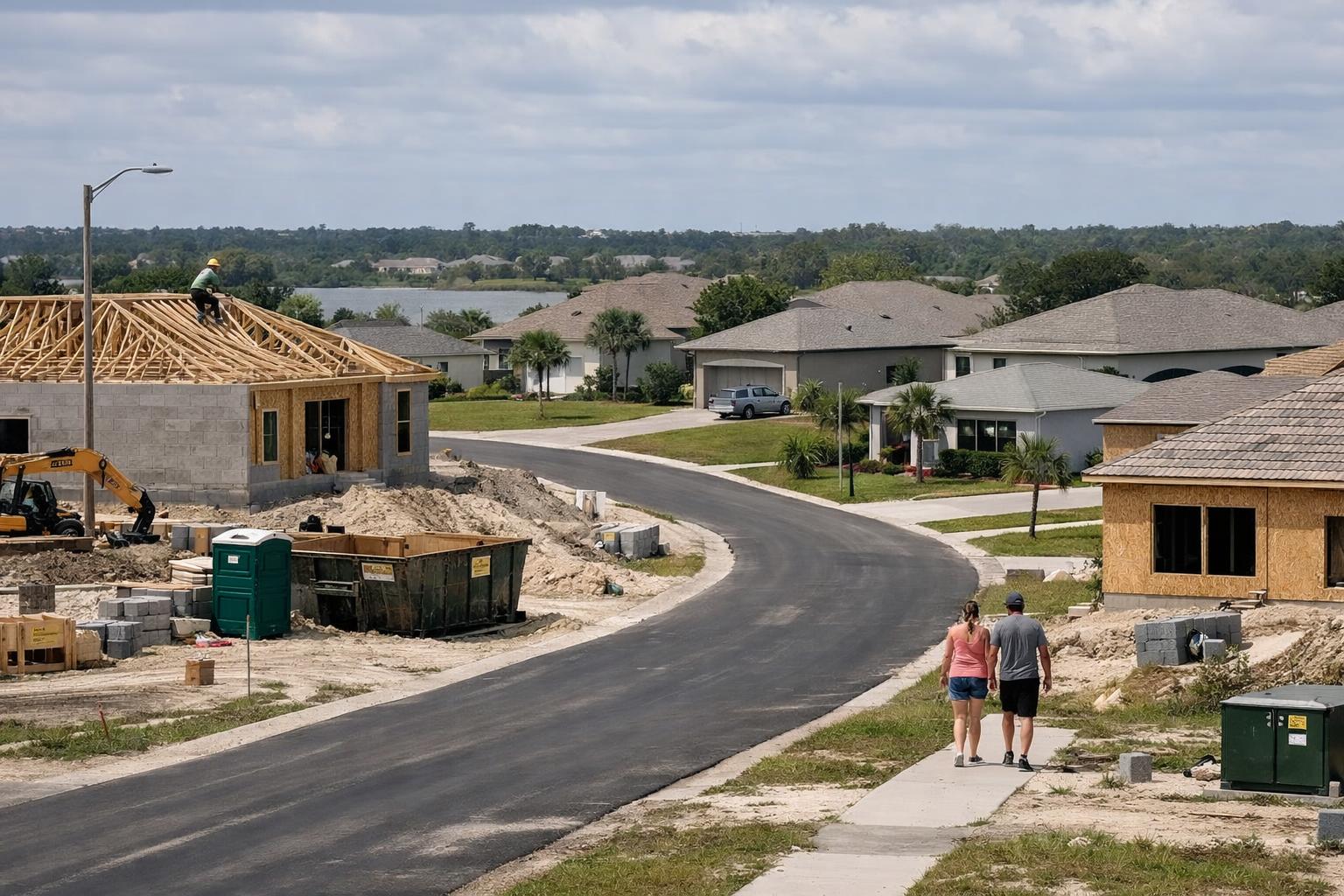
New data show Florida's outsized share of national homeowners insurance litigation has nearly halved since 2020, as legislative reforms attract new carriers and hint at greater stability for buyers and closings.
Source: Original report
Florida's property insurance market is showing meaningful signs of stabilization, with the state's share of national homeowners insurance lawsuits declining sharply over the past five years — a shift that could benefit buyers, sellers and lenders navigating one of the country's most complicated insurance environments.
The Numbers Behind the Shift
According to data from the Florida Office of Insurance Regulation cited by Insurance Journal, Florida accounted for roughly 5% of homeowners insurance claims across the U.S. in 2025 — yet generated about 41% of all related lawsuits nationwide. While that ratio remains disproportionate, it represents a dramatic improvement from 2020, when Florida held about 9% of national claims but drove more than 79% of claims litigation.
In other words, the state's lawsuit share has nearly been cut in half over five years, a trend regulators and industry observers attribute to a pair of legislative overhauls.
What Changed: 2022 and 2023 Reform Laws
Florida lawmakers passed insurance reform legislation in both 2022 and 2023 targeting the litigation dynamics that had long destabilized the market. Key provisions included:
- Limits on attorney fee arrangements in property insurance lawsuits
- A ban on assignment-of-benefits agreements, which had allowed contractors to sue insurers directly on behalf of policyholders
These measures reduced the financial incentives that had made Florida unusually attractive for litigation, contributing to insurer exits and rate spikes in prior years.
New Carriers Entering the Market
Since the reforms took hold, at least 20 new insurance carriers have entered the Florida market, according to Insurance Journal. Several established insurers have also announced rate reductions, broadening the competitive landscape for homeowners shopping for coverage.
What This Means for Buyers and Closings
Insurance costs are a critical variable in Florida real estate transactions. High premiums can push monthly carrying costs beyond what buyers qualify for, while coverage gaps or insurer uncertainty can stall or derail closings entirely.
A healthier carrier market does not guarantee immediate or uniform rate relief — premiums still depend on property type, location, risk exposure and the individual insurer. But a wider selection of competing carriers could make it easier for buyers to secure required coverage, compare policy terms and plan more accurately for ownership costs before signing a contract.
For real estate professionals, the trend points toward a more predictable insurance environment — one that may reduce last-minute closing complications tied to coverage availability or cost surprises.