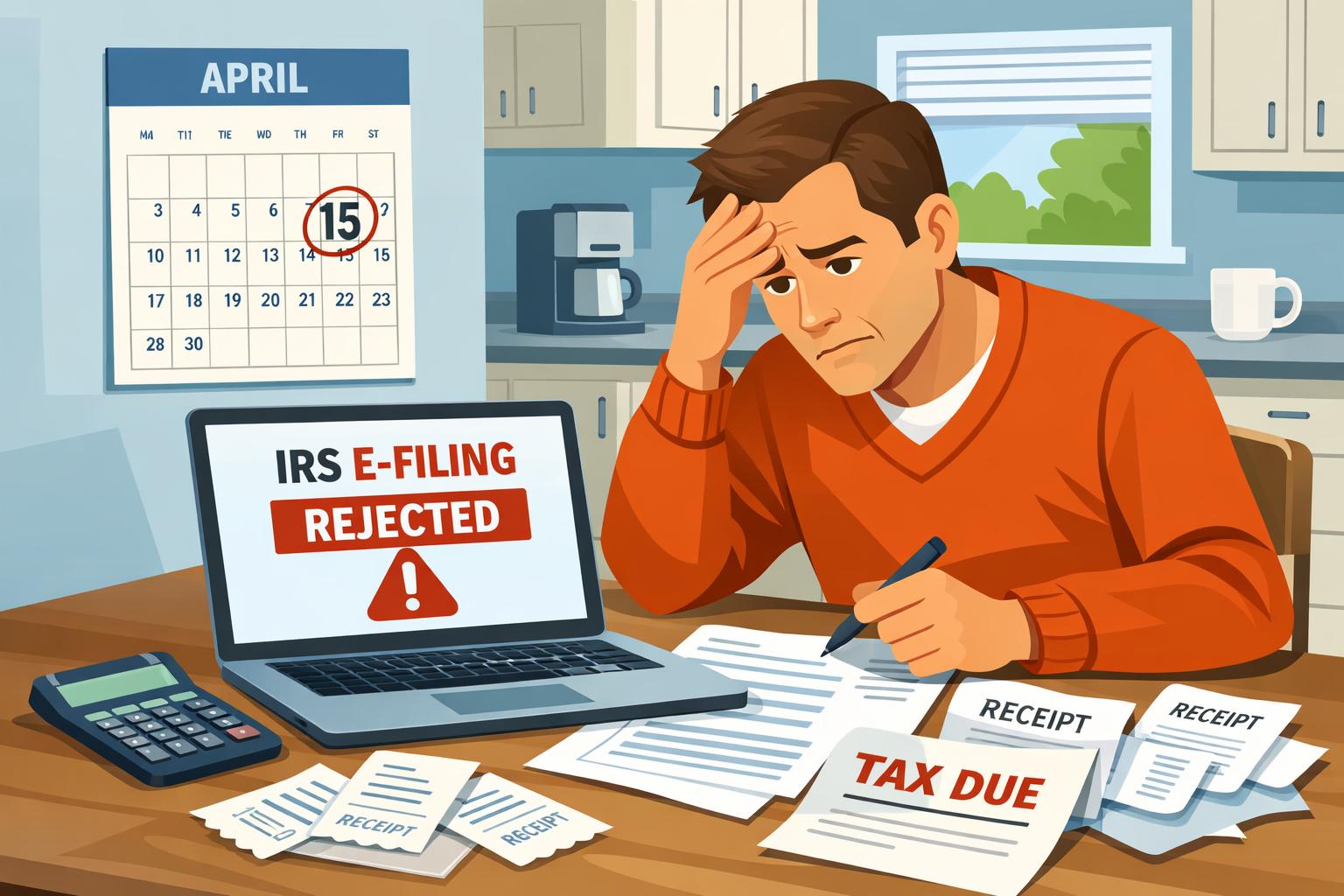
With Tax Day closing in, finding out that the IRS has bounced your return can be unnerving. A rejection slows the clock on your refund, which the IRS reports is averaging $2,476 so far this season and trending higher as more returns are processed.
A rejected return is treated as not filed, so you need to move quickly to correct the issue and get it accepted before the April 15, 2026 deadline for 2025 returns and any payments due.
How You Find Out Your Return Was Rejected
Most e-filers learn within about one to two days whether the IRS has accepted or rejected their return. The software or online platform you used to file should alert you and display the IRS rejection code along with basic instructions.
In fiscal 2024, nearly 18 million individual e-filed returns were rejected, roughly 12% of all e-filed individual returns, according to the National Taxpayer Advocate. Many of these returns were ultimately fixed and accepted after taxpayers addressed simple errors.
Common Reasons the IRS Rejects E-Filed Returns
Most IRS rejections stem from basic data or documentation issues that can be corrected without much drama. Understanding the likely culprits helps you zero in on the problem quickly.
Incorrect Social Security number: A digit out of place or a transposed number can trigger an automatic rejection.
Name mismatch: The name on your return must match what is on file with the Social Security Administration, including spelling and, in some cases, hyphenation.
Missing required forms: Omitting a needed attachment or schedule is a common reason for a bounced return.
Prior-year AGI or PIN mismatch: For tax year 2023 filings, the top e-file rejection reason was entering a prior-year adjusted gross income or self-select PIN that did not match IRS records.
The IRS assigns specific reject codes that describe what went wrong. For taxpayers using Free File Fillable Forms, the IRS also offers an Error Search Tool that can help decode those messages and suggest a path to fix them.
Steps to Fix a Rejected Tax Return
Your next move depends on the rejection reason, but in many cases you can stay fully online and simply re-file.
1. Review the rejection notice carefully. Start with the message from your e-file provider, which should highlight the IRS reject code and a brief explanation.
2. Correct obvious data errors. Mistyped Social Security numbers, incorrect payer identification numbers and similar typos can usually be fixed directly in the software.
3. Attach or update missing information. If a form or schedule was left off, add it before you try again.
4. Resubmit electronically when allowed. According to the National Taxpayer Advocate, of the nearly 18 million e-filed returns rejected in 2024, about 13 million – more than 70% – were ultimately accepted electronically after correction.
Sometimes e-filing is no longer an option. If the system flags your return as a duplicate, the IRS may suspect identity theft or another filing conflict. In those situations, you may be required to mail a paper return instead of using e-file again.
When potential fraud is involved, the IRS will communicate by mail with instructions on how to verify your identity or resolve the issue. Watch your mailbox and respond promptly to avoid prolonged delays.
Deadlines: How Long You Have to Fix a Rejected Return
Because a rejected return does not count as filed, the usual due date still applies. For the 2025 tax year, taxpayers generally have until April 15, 2026 to file and pay any balance owed. Missing that date can expose you to penalties and interest.
If your e-filed return is rejected near the end of filing season, timing rules get more specific, according to the Taxpayer Advocate Service.
Correcting and re-e-filing: When a return is rejected at the tail end of the season, you typically have five days to fix the errors and successfully resubmit electronically for it to be treated as timely.
Switching to a paper return: If you must file on paper, the Taxpayer Advocate Service notes that your return is considered on time if it is postmarked by the original due date, or within 10 calendar days of the IRS notice of e-file rejection, whichever comes later.
Why This Matters for Homeowners and Buyers
For many households, a tax refund functions as a key piece of their housing budget. Buyers may be counting on refund dollars for closing costs or moving expenses, while existing owners might be earmarking that cash for repairs, insurance or property tax bills. A rejected return and delayed refund can ripple through those plans, especially in a tight real estate market.
Staying on top of IRS notifications, understanding reject codes and responding quickly can help keep your refund – and any housing-related plans that depend on it – moving forward on schedule.