Florida Scraps Emergency Insurance Fee Ahead of Plan
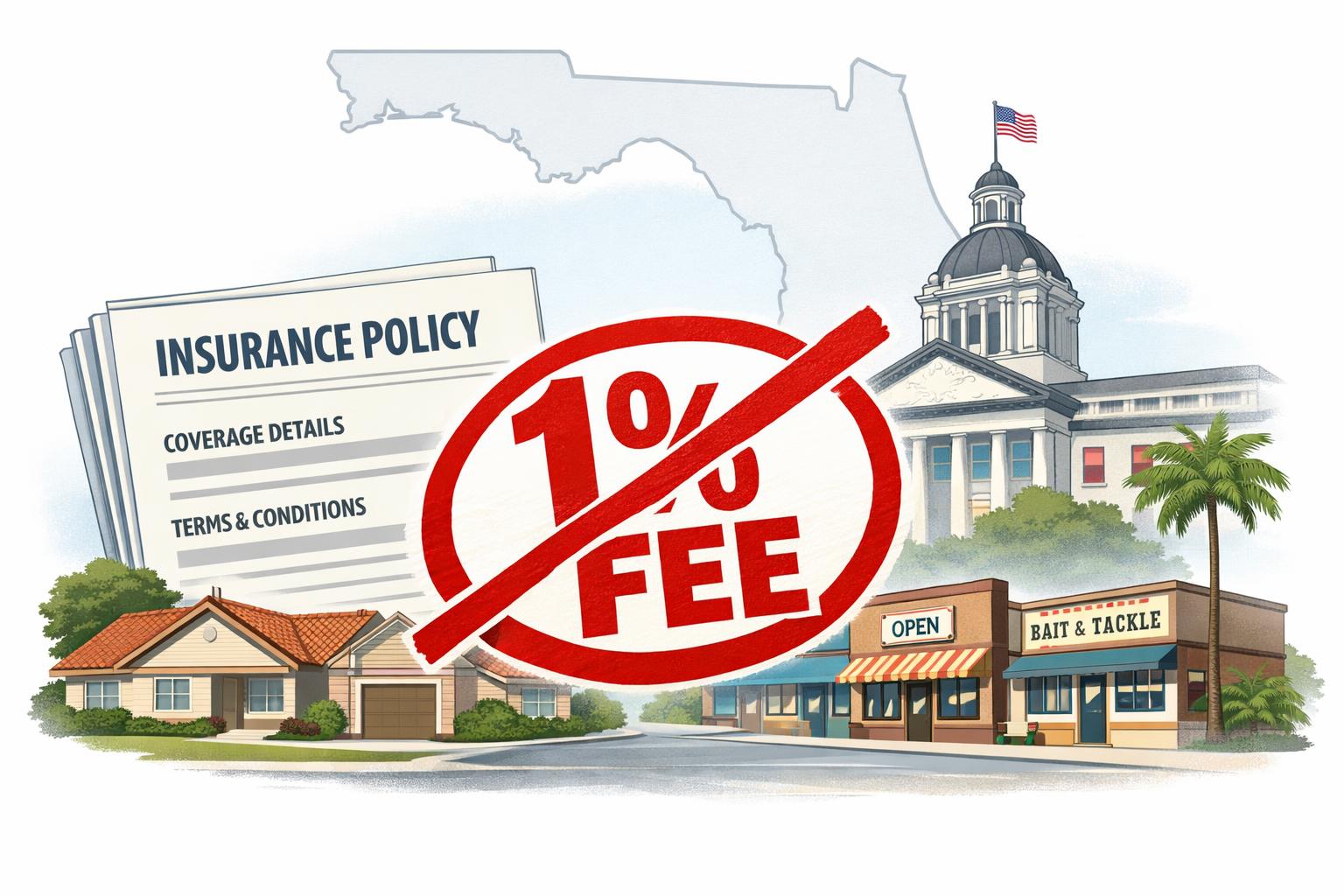
A statewide 1% emergency assessment on Florida property insurance policies will wrap up two years sooner than originally scheduled, after the Florida Insurance Guaranty Association (FIGA) voted to end the charge. The fee will remain on policies renewing through September 30, 2026, and then disappear for policies effective on or after October 1, 2026.
State officials estimate the early sunset will keep roughly $650 million in premiums in the pockets of Florida homeowners and businesses over the following two years, through September 30, 2028. The exact savings will vary for each policyholder, depending on their annual premium.
What the Assessment Meant for Individual Policyholders
The emergency fee was straightforward: a 1% surcharge on the annual property insurance premium. That translated into relatively modest, but noticeable, add-ons for most policyholders.
On a $2,000 yearly premium, the fee cost about $20 per year.
On a $3,500 yearly premium, it added about $35 annually.
On a $5,000 yearly premium, it totaled about $50 per year.
For buyers budgeting monthly housing costs in a high-price insurance environment, trimming even small recurring surcharges can help improve affordability and debt-to-income ratios.
Why the Fee Was Created
The 1% assessment was first applied on October 1, 2023. It was designed to help FIGA repay bonds issued after a series of insurer collapses in Florida left unpaid claims and required refunds of unused premiums. Those insolvencies pushed FIGA to tap the broader market for funding, with the emergency charge serving as a dedicated repayment stream.
FIGA, established by the Florida Legislature in 1970, acts as a financial backstop for policyholders when a property and casualty carrier fails. Its operations are funded through three main sources: remaining assets from failed insurers, reinsurance recoveries, and assessments such as the 1% charge levied on insurance policies statewide.
Signals of a Stabilizing Insurance Market
State leaders framed the early end of the surcharge as evidence that Florida’s property insurance market is on firmer footing following sweeping legislative changes enacted in 2022. Those reforms aimed to curb litigation costs, reduce abuses in claims handling, and attract or retain private insurers in a market long strained by hurricane risk and mounting reinsurance expenses.
Florida’s chief financial officials highlighted the decision as a win for consumers, emphasizing that insolvencies do not just affect a single insurer’s customers but can ripple through the entire market. When companies fail, FIGA steps in, and the cost of that safety net is ultimately borne by policyholders across the state.
Insurance regulators also pointed to the early termination as another data point suggesting the market has begun to stabilize, with enough improvement to accelerate bond repayment and remove an extra layer of cost from premiums.
Impact on Florida Real Estate and Affordability
Property insurance costs have become a central factor in Florida homebuying decisions, influencing everything from how much buyers can finance to whether out-of-state movers follow through on a relocation. Florida Realtors® has consistently backed efforts in Tallahassee aimed at improving market stability, recognizing that sustained premium spikes can chill sales and strain existing owners.
While the end of the 1% assessment will not reverse years of premium growth, it removes one layer of extra cost that was directly tied to past insurer failures. For prospective buyers comparing markets, even modest reductions can make certain neighborhoods or property types more attainable. For existing owners, the change offers some relief at renewal time and may slightly improve the overall cost profile of staying in their homes.
For real estate professionals, the key takeaway is that Florida’s insurance landscape is still evolving, but the early expiration of this fee is one of the first tangible signs that recent policy shifts are beginning to ease, rather than add to, the cost burden on property owners.